
Paul Drury: The Stories Behind Classic Coin-Ops
To Order Book, Click here. Limited QTY left
For generations of gamers, classic arcade games seemed to arrive almost magically. One day there was an empty corner of an arcade, pizza parlor, bowling alley or convenience store, and the next there was a colorful new cabinet demanding a quarter.
But every one of those games had a story.
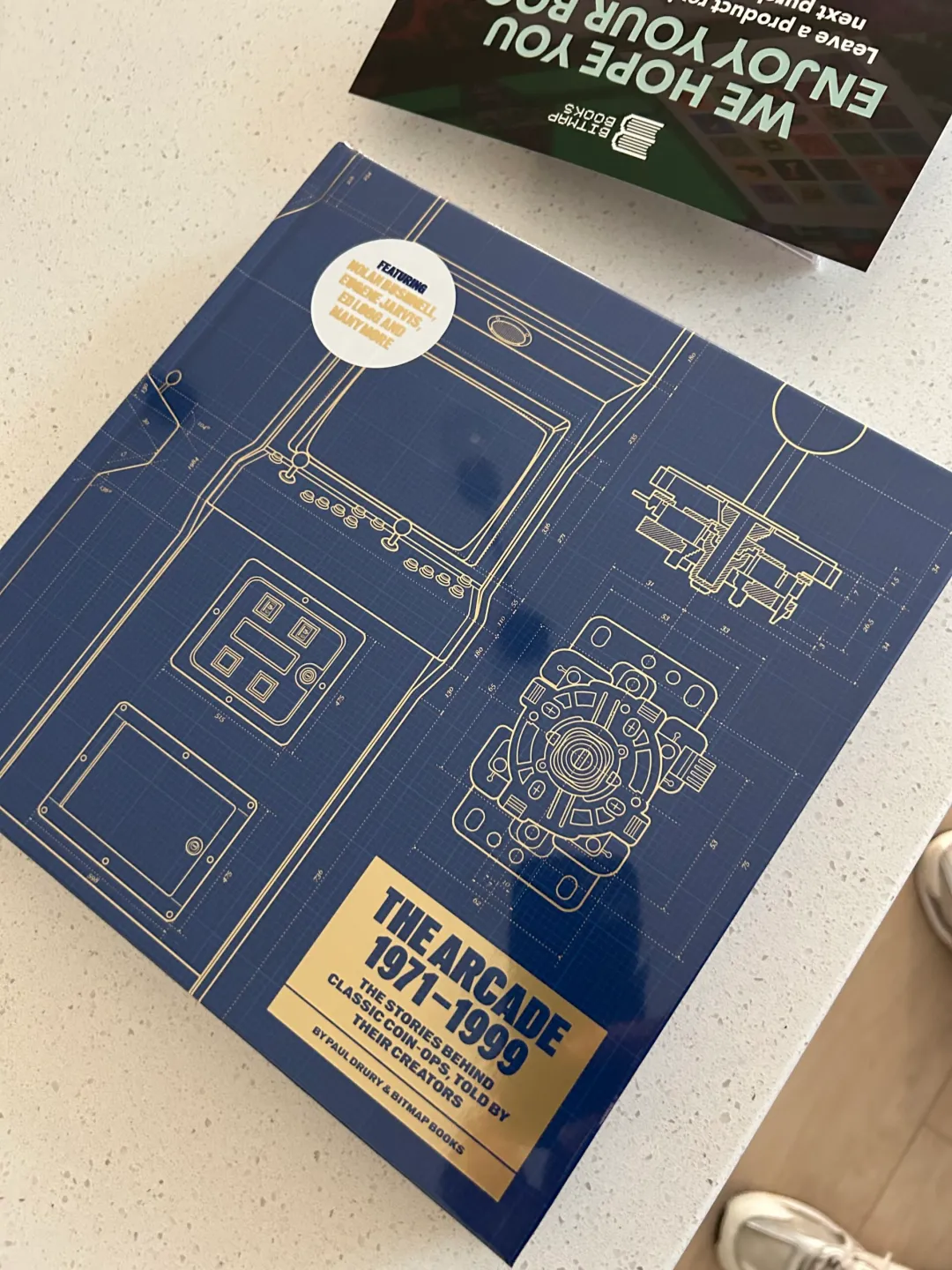
That idea lies at the heart of The Arcade 1971–1999: The Stories Behind Classic Coin-Ops, Told by Their Creators, written by longtime video game journalist Paul Drury and published by Bitmap Books.
Paul Drury has been a freelance video games journalist for more than 20 years. A regular contributor to Retro Gamer since its launch in 2004, he has also written extensively for Edge and the Nottingham Post. He is the author of The Arcade 1971–1999: The Stories Behind Classic Coin-Ops, Told by Their Creators. Over his career he has interviewed hundreds of game developers, artists and musicians. Away from games journalism, he is a Senior Lecturer at Nottingham Trent University.
I recently sat down with Drury to discuss the book, his favorite discoveries, Eugene Jarvis, Defender, Moon Patrol, I, Robot, Spy Hunter, Street Fighter II, Dragon’s Lair and why preserving the stories of the people behind these games is becoming increasingly important.
THE INTERVIEW
What originally inspired you to create this book about arcade games?
I’ve been writing about video games since 2002, so it’s been over two decades. Arcade games were what introduced me to video games. I was born in 1970, so I literally grew up as the arcades grew up.
I’ve got vague memories of Pong, but the first game I remember playing was Boot Hill. Then I remember Galaxian absolutely blowing me away. I’ve always had a real fondness for arcade games.
The real story behind the book goes back to 2021, when my dad died. It was quite a shock, and I had some time off work. I saw that a book about arcade games had just come out and thought I’d look at it because, when you’re sad, you look for a happy place. The arcades were always a happy place for me.
The book was full of nostalgia—pictures, screenshots and memories of playing games in arcades and chip shops—and that’s absolutely fine. But what struck me was that there wasn’t much input from the people who actually made the games.
Over the previous 20 years, I’d spoken to many of those people.
When we first encountered arcade games, they seemed to just arrive fully formed in the arcade, café or 7-Eleven. But after talking to the creators, I knew that wasn’t what happened at all.
They began as vague ideas in someone’s head. Something would go wrong. Someone would make a mistake. There would be a technological breakthrough or a eureka moment.
I wanted to show that these games were made by real people—people who were fallible, who had breakthroughs and disappointments, and who often remain intensely connected to what they created.
That’s why I would ask questions like: How did you feel when management told you the game wasn’t good enough? How did you feel when a project was cancelled? How did you feel when you finally saw people lining up in an arcade to play something you’d created?
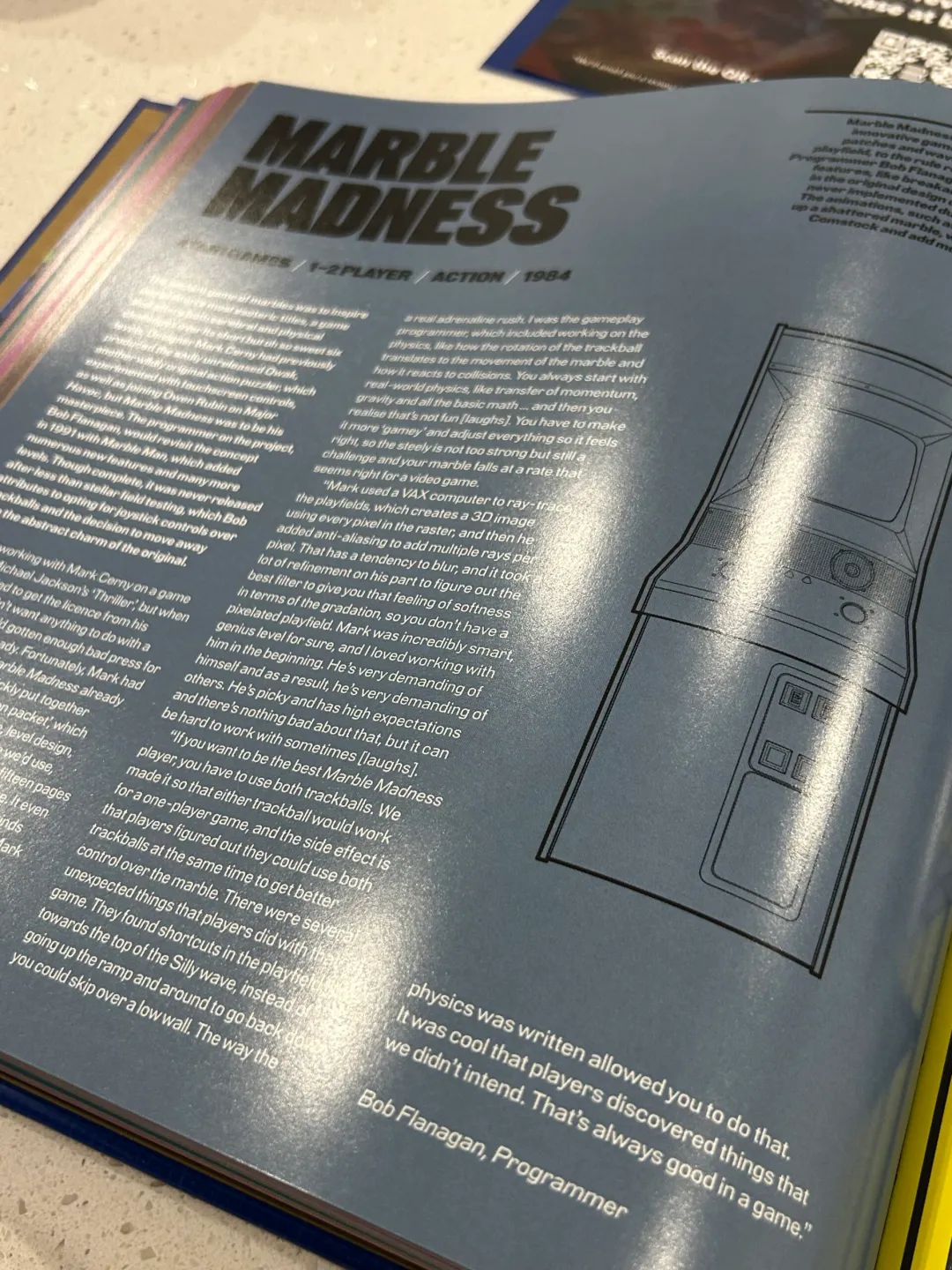
Every one of the 120 entries in the book includes the voice of at least one person—and sometimes two or three people—who actually worked on the game.
Was there an interview where you learned something about arcade development that really surprised you?
There are so many!
One example demonstrates how sometimes technology created the game rather than the other way around.
At Atari, there was technology that allowed the screen to scroll multidirectionally. The question became: “What can we do with this?”
Driving games were popular, so they started thinking about creating something around driving. A city environment would have been difficult to produce with the technology of the time, so they moved toward the countryside.
That became Super Bug.
I remember seeing that game at a swimming pool when I was young. The scrolling seemed magical. As a child, I almost imagined the road physically coming out of the back of the machine and continuing behind the cabinet.
It showed how a technological breakthrough could fire the developers’ imaginations—and then fire the player’s imagination too.
Was there a game you already loved, but talking to its creator completely changed the way you looked at it?
Talking to Eugene Jarvis about Defender.
When you look at Defender now, it’s such an extraordinary game that you assume it was always destined to exist.
But when Eugene described its development, you realize how many times that game could have died.
He began with essentially a blank screen and the question of what to make. He experimented with ideas inspired by games such as Spacewar! and Asteroids. Things didn’t work. Ideas were boring. He created the landscape and spent ages getting the little humanoids moving—and still wasn’t convinced.
At so many points, the project could have stopped.
Just imagine if Eugene had simply walked away. We might not have had Defender, and that could have changed the path leading to games such as Robotron: 2084 and much of his later career.
Eugene actually wrote the afterword for the book, and he has six games represented, more than any other creator.
There’s another wonderful Defender story. Eugene was so nervous about the game’s first location test that he didn’t even go initially. His colleagues went and told him, essentially, “It’s okay. They get it.”
When he eventually went, there were people gathered around watching the game. Someone had even pulled up a sofa.
Imagine seeing that and realizing:I made this.
You also mentioned Moon Patrol, which is one of my favorites.
Mine too.
I spoke with Scott Samura, who was a producer at Irem, and it was fascinating because I’d always loved Moon Patrol. I knew it had been developed in Japan and released by Williams in America.
Look at the parallax scrolling. Technically, the game could work without it. You could still drive, jump holes and shoot enemies.
The wheels didn’t necessarily need to move independently either.
But those details were about immersion.
They wanted you to feel as though you were traveling across this rough lunar surface. The moving wheels helped sell that sensation, while the layers of parallax scrolling made you feel as though you were traveling through an alien world.
And then there’s the music.
None of those elements were strictly necessary for the basic mechanics, but together they created an emotional experience.
That’s what I loved discovering.
Your book begins in 1971. Which period was the hardest when it came to finding developers and preserving their stories?
The 1970s, definitely.
When we talk about preservation, we tend to focus on hardware, cabinets, PCBs and dumping ROMs. All of that is incredibly important.
But we also need to preserve the people.
Many of the people who made these games in the 1970s are now in their seventies or eighties, and some are unfortunately no longer with us.
I was very pleased to include Warrior, created by Tim Skelly. It’s a beautiful vector game and an important early one-on-one fighting game using weapons. Tim died several years ago. I’d interviewed him previously, so I could return to that material.
There are already several people represented in the book who are no longer with us.
That’s another reason I wanted to make this book now.
These stories can disappear.
To Order Book, Click here. Limited QTY left
Let’s move into the 1980s. What’s one story from that era that stands out?
I was very proud that I got to speak to Dave Theurer about I, Robot.
I sat down with him at his local bar in California. At first, he gave me that response you sometimes get: “It was such a long time ago. I’m not sure I remember.”
Half an hour later, everything was flooding back.
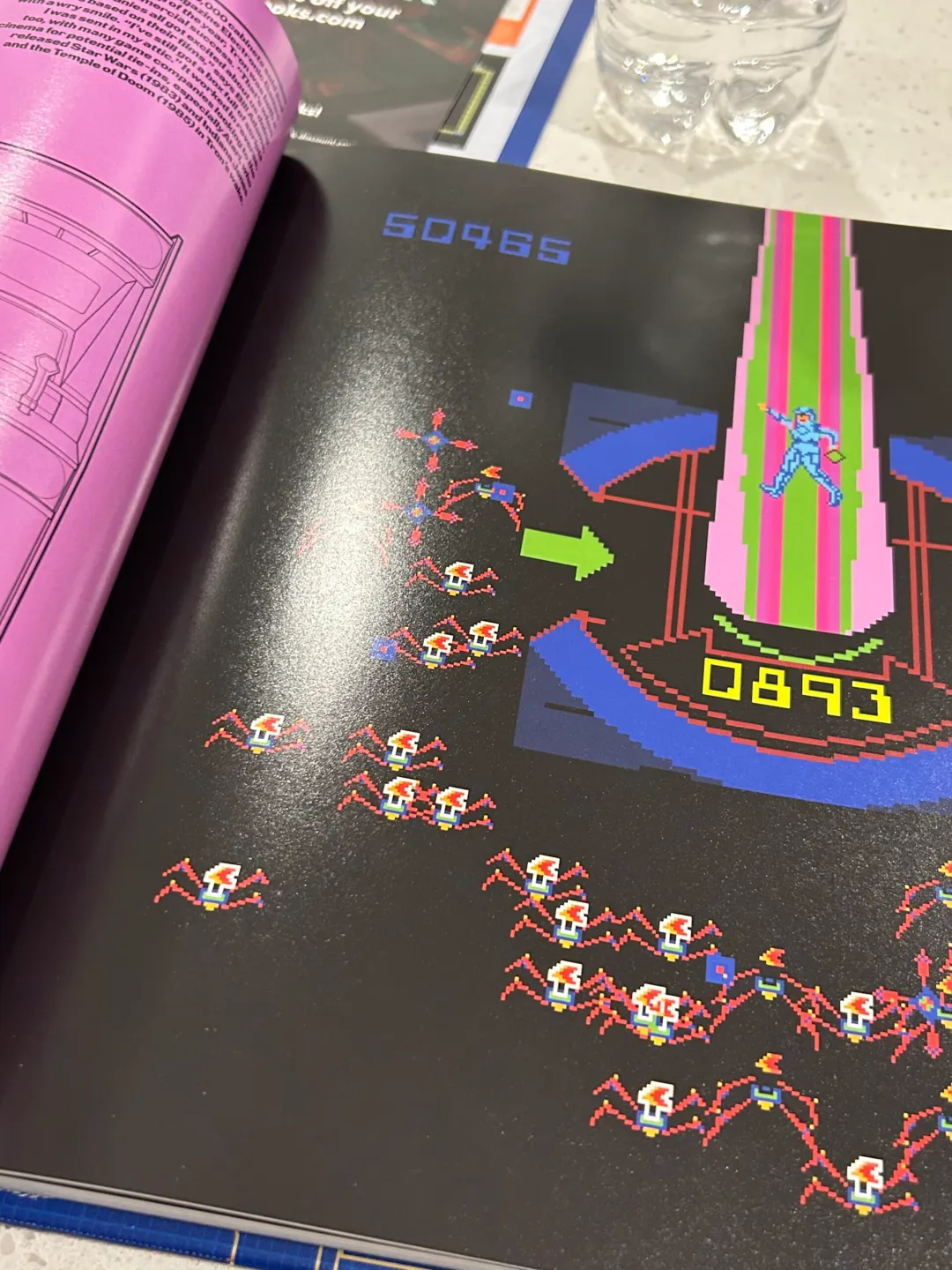
The hardware technology was capable of producing polygonal graphics, and suddenly the question became: What can we do with this?
Dave described going to Yosemite and looking around at the landscape. He saw the waterfalls and mountains and realized, with this technology, they could create these kinds of things.
You could see the excitement in his eyes decades later.
That’s the sort of moment I wanted the book to capture.
What about Spy Hunter?
Paul: That’s another wonderful example.
I spoke to George Gomez, who worked as an artist and hardware engineer and helped formulate the idea.
When he was planning the road, he drew it on an extremely long piece of paper or vellum. The programmer could stretch this road design around the office and refer to it while coding the game.
Of course, I immediately asked George, “Do you still have it?”
Unfortunately, he didn’t!
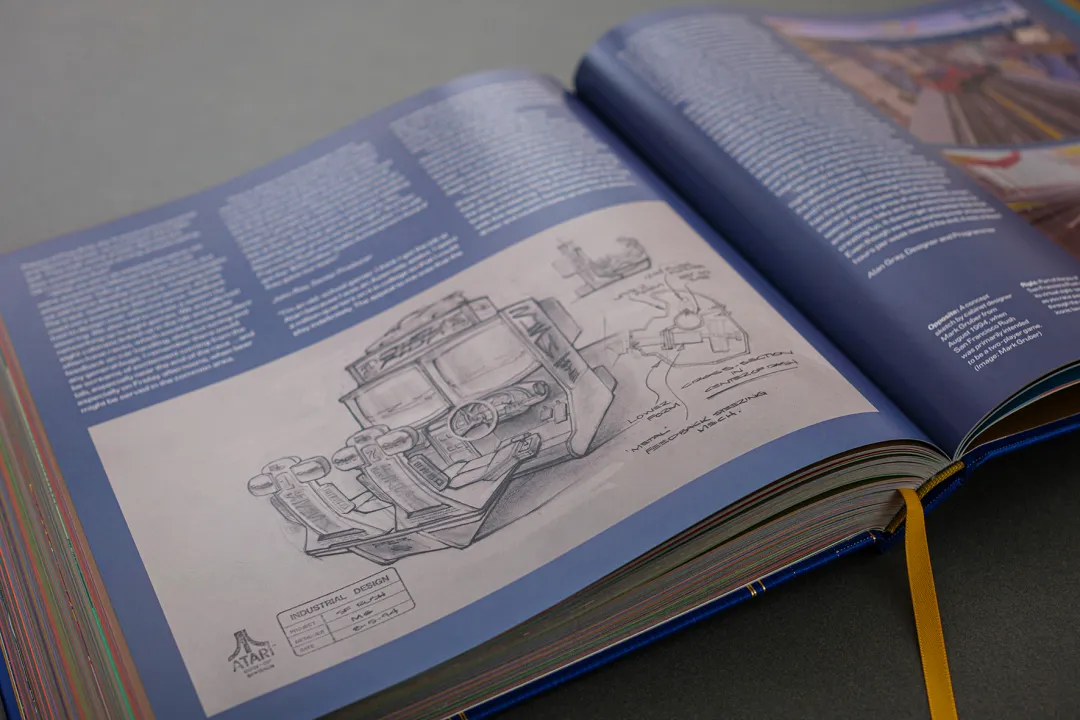
Those artifacts are fascinating, and we managed to include quite a few surviving examples in the book.
There are early materials from Star Wars, early Paperboy sketches and handwritten design material from games such as Joust.
These aren’t just finished games anymore. You can actually see part of the creative process that produced them.
Fighting games present a completely different challenge. What did you learn from researching games like Street Fighter II?
Japanese games presented a challenge because of the language barrier.
Of the 120 games, 65 are Western-developed, mostly American, along with three British-developed games. For some of the Japanese material, I had help from Martin Carroll and John Szczepaniak.
With Street Fighter II, one thing that fascinated me was hearing Akira Nishitani discuss balancing the fighters.
Today we’ve played Street Fighter II for decades, so we know it works.
But imagine designing it.
You have all these different fighters and every possible matchup between them. You change a move because it works badly against one character, only to discover you’ve now created another problem when that fighter faces somebody else.
They played and tested it repeatedly. Players tested it in arcades, while the developers watched and took notes.
That constant process of balancing was fascinating to me.
Were there games or stories you wanted to include but couldn’t?
Absolutely.
There are more than 4,000 arcade games documented, so 120 entries is still only a fraction of arcade history.
There were games for which I had interviews but ultimately decided to hold them back.
One was Sega’s arcade version of Sonic the Hedgehog. We had material from one of the original developers, but it’s quite an obscure game and never came outside Japan.
Another was Gravitar, which I love. Mike Hally was very open about its development, but again, it didn’t have the recognition of something like Asteroids.
Those are the sorts of games I metaphorically put behind my ear for a possible Volume Two.
Speaking of Volume Two, would that move into arcade games from 2000 onward?
Not specifically.
Arcades obviously continued beyond 1999, and people like Eugene Jarvis and Raw Thrills have done a fantastic job keeping coin-operated video games alive.
But the golden age has passed.
A second volume would give us an opportunity to revisit games from 1971 onward that we couldn’t include this time—particularly games that are perhaps less famous but equally brilliant.
I wouldn’t rule out including games from the new millennium, but that wouldn’t be the primary focus.
To Order Book, Click here. Limited QTY left
Did you get Nolan Bushnell involved?
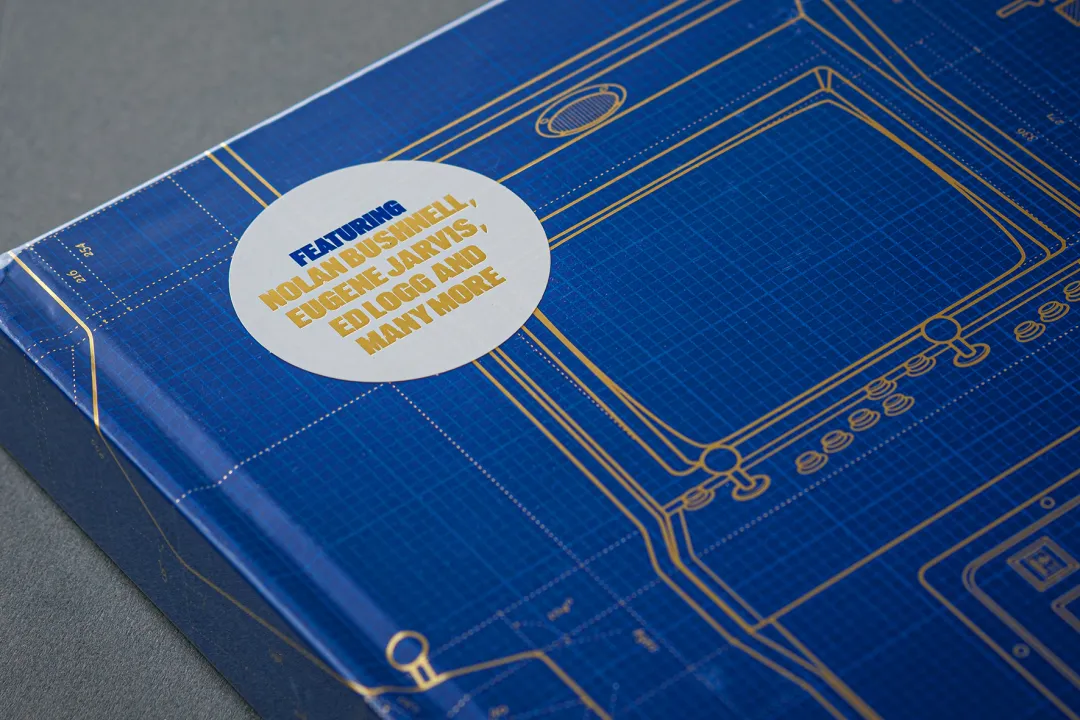
Paul: Yes. Nolan wrote the foreword.
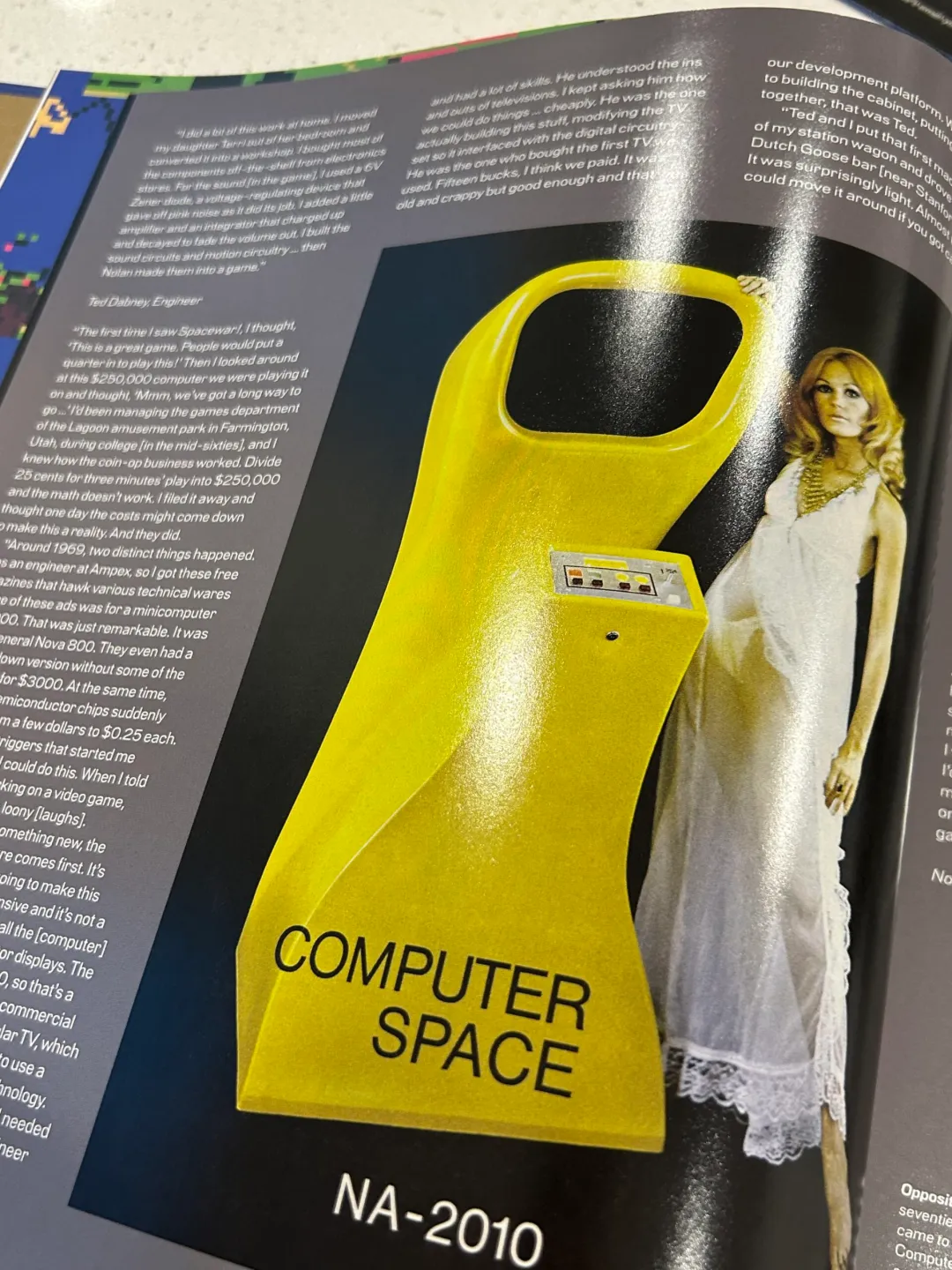
I also spoke with him about Computer Space and Pong, and I’d previously interviewed Ted Dabney before he passed away.
With Breakout, Nolan was able to give me his perspective, and I also managed to speak to Steve Wozniak about creating the prototype.
That’s another example of why recording these interviews matters. You can return to the original conversation years later and find pieces that didn’t fit into an earlier article.
Chicago played such an important role in arcade history through Williams, Midway, Bally and others. Would you ever consider doing a book about pinball?
I love pinball, but I’m definitely a player rather than a historian.
One reason Chicago became so important to video games was its long history with pinball. Many of those companies began with pinball and then moved into video games.
What’s fascinating is seeing that crossover.
Look at Qbert*. When Q*bert falls from the pyramid, there’s that physical “knock” from inside the cabinet. That comes from the pinball world.
You can see and hear that influence throughout the games made by companies with pinball backgrounds.
Sound designer David Thiel, for example, was creating sounds algorithmically. They weren’t simply playing recordings. They were manipulating code and listening to the results until something suddenly sounded right.
That whole crossover between pinball and video games is fascinating.
What do you think about places like Galloping Ghost and other arcades that keep these games playable today?
It’s fantastic.
I’ve been to Galloping Ghost, and I’ll be returning to the American Classic Arcade Museum at Funspot.
Here in Britain, we also have Arcade Club locations, including Bury, Blackpool and Leeds.
Obviously, there’s a huge nostalgia rush when you walk into these places. The lights, sounds, cabinets and atmosphere immediately take you back.
But something else is happening too.
I was recently playing Donkey Kong at an arcade in Nottingham. Next to me was a university-age student playing Pac-Man.
That game was created decades before this person was born.
Yet they were playing it and enjoying it.
That’s what the best arcade games do.
They’re easy to learn and difficult to master—the mantra Nolan Bushnell talked about.
It means these games aren’t surviving solely because of nostalgia. There’s something timeless about their design.
Even the sounds of an arcade can instantly take you back.
Absolutely.
One developer described creating arcade audio as working in an “audio war zone.”
Think about it.
When you’re playing an arcade game, you’re looking directly at your game’s screen. The other screens around you don’t interfere with what you’re seeing.
Sound doesn’t work that way.
Every cabinet around you is making noise.
So designers had to create sounds that could stand out from that cacophony while also communicating useful information to the player.
In Qbert*, for example, sounds aren’t simply decoration. They tell you something is happening. They prepare you to react.
Try playing a classic arcade game with the sound turned off.
It’s not the same experience—and in some ways, it’s not even the same game.
To Order Book, Click here. Limited QTY left
Did you cover Dragon’s Lair?
Yes.
Dragon’s Lair is almost like the video game equivalent of asking someone, “Do you remember where you were when this happened?”
People remember the first time they saw Dragon’s Lair.
As hardened gamers, we can look back now and say the interaction was fairly minimal. It’s largely a reaction and memory game.
But that misses what it felt like in 1983.
We were absolutely transfixed because it looked like we were playing a cartoon.
People sometimes claim that older games were purely about gameplay and nobody cared about graphics.
That’s rubbish!
We were always looking for the next visual breakthrough.
When Galaxian gave us color, that mattered. When characters began looking more recognizably human, that mattered. Then Dragon’s Lair appeared and looked like an animated movie.
For the book, we spoke with Gary Goldman, who had worked with Don Bluth and had just finished The Secret of NIMH. A strike meant they couldn’t continue onto their next film project in the normal way, and the opportunity to work on Dragon’s Lair arrived at exactly the right time.
They knew animation. They hadn’t made a video game.
So they essentially figured it out.
And because you die so frequently in Dragon’s Lair, they made dying entertaining.
Think about that achievement: players kept failing, yet they remained completely transfixed by the experience.
That’s extraordinary.
Finally, what do you hope people take away from The Arcade 1971–1999?
It’s a coffee-table book. It’s big, colorful and beautifully produced by Bitmap Books.
I only pitched the idea to them. If Sam Dyer at Bitmap Books had said no, I wouldn’t have done it with anybody else.
And I’m not naïve. I know that a book about arcade games is partly about nostalgia.
Someone will open it, see Pole Position or another cabinet and immediately think, “Oh my God, I remember playing that!”
We’ve got wonderful cabinet artwork from Adam Rufino, so readers get that visual nostalgia.
But then I want them to turn the page.
They’ll find interviews with the people who actually created these games and discover that the game didn’t arrive fully formed.
It began in someone’s head.
Things went right. Things went wrong. Something couldn’t be included. Somebody wanted to try something else. Maybe the technology wasn’t ready. Maybe management didn’t like it. Maybe they barely got everything working in time.
There is a human story behind every one of these creative endeavors.
It’s like watching a movie you love and then listening to the director’s commentary. Suddenly you understand why certain decisions were made, what was changed and what nearly didn’t happen.
Hopefully people will come to the book because they remember these games.
But I hope they leave with a deeper appreciation for the people who made them.
More Than Nostalgia
That may ultimately be the most important message behind Drury’s project.
Classic arcade games are increasingly being preserved through restored cabinets, emulation, ROM preservation and institutions dedicated to keeping original machines operating. But the memories of the men and women who created those games are just as fragile as the hardware.
A circuit board can potentially be repaired. A ROM can be copied.
A story that was never recorded can simply disappear.
The Arcade 1971–1999 attempts to preserve both sides of arcade history: the games that millions of us remember and the people whose ideas, experiments, mistakes and breakthroughs put those games into our arcades in the first place.
For those of us who grew up surrounded by the glow of arcade monitors and the unmistakable chorus of attract modes, explosions, digital voices and quarters dropping into machines, these weren’t simply games.
They were experiences.
And, as Paul Drury’s book reminds us, somebody had to create every one of them.
To Order Book, Click here. Limited QTY left
Related
Original article by www.oldschoolgamermagazine.com