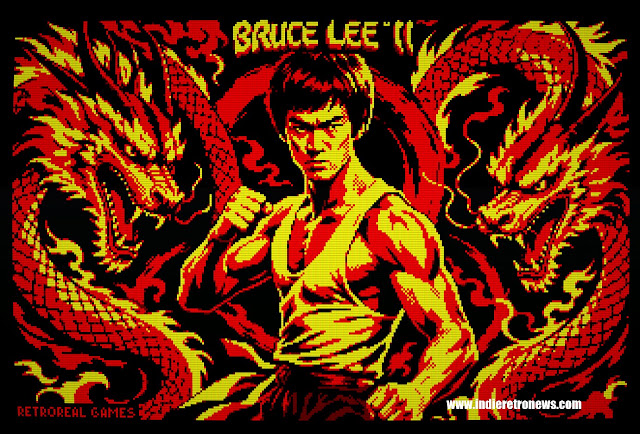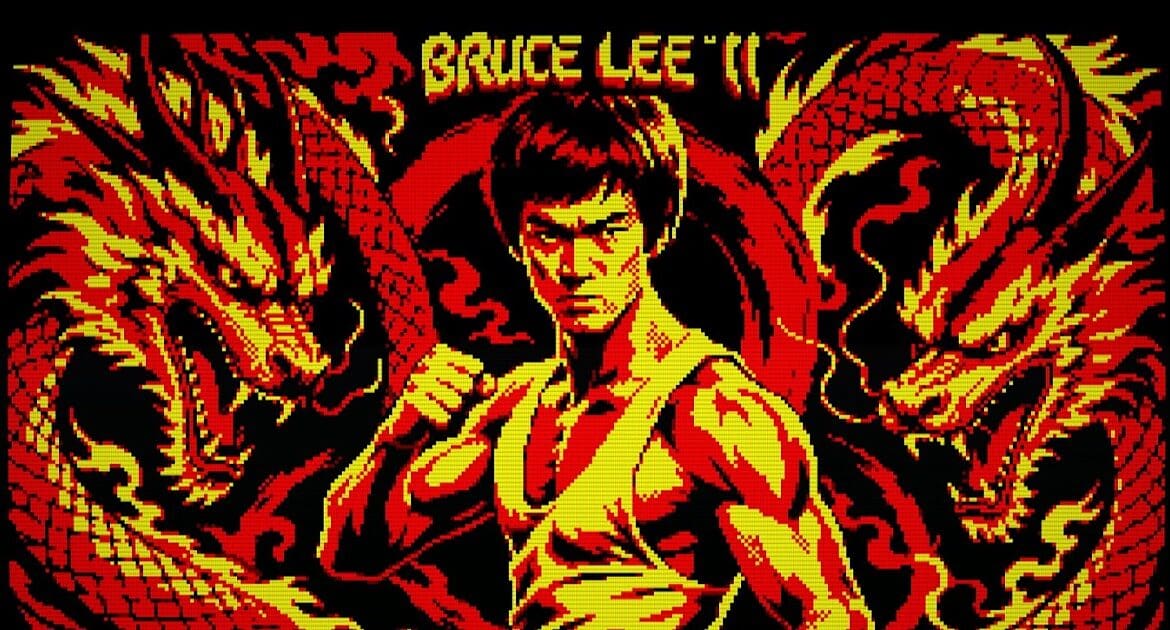
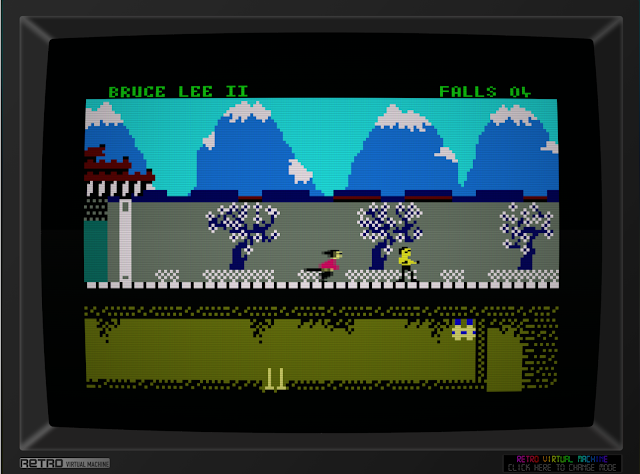
RetroReal Games has released an Amstrad CPC conversion of Bruce Lee II, bringing the fan-made sequel directly to the classic CPC that initially inspired its aesthetic. The franchise’s history dates back to 1984 when Datasoft published the original Bruce Lee, a smash-hit across 8-bit microcomputers. That title achieved its notable success through a finely tuned blend of combat, exploration, and platforming. A massive part of its classic appeal was the non-stop, hectic interaction with two recurring adversaries—the nimble ninja and the brute green Yamo—all framed within a highly accessible level layout. As noted by the website, When U.S. Gold distributed the original Amstrad CPC version, it stood out as a community favorite for its incredibly responsive controls and exceptionally vibrant palette.
The story advanced in 2013 when developer Bruno R. Marcos designed Bruce Lee II as a PC sequel built with strict fidelity to those classic mechanics. Centered on a mission to rescue Bruce’s sister from the villainous Tao-Bao, the game expanded the scope of the original with far more complex environments, introducing switches, traps, moving platforms, and even underwater swimming sections. It did all this while faithfully preserving the original game’s straightforward physics and intuitive gameplay, while tossing in new adversaries inspired by martial arts legends Chuck Norris and Kareem Abdul-Jabbar. Remarkably, Marcos used the Amstrad CPC version as his definitive visual guide, even going so far as to include an exclusive display mode that simulated the machine’s distinct graphical style.
While programmer Jonas Hultén successfully adapted the game for the Commodore 64 back in 2015—proving the design was a great fit for period systems—the Amstrad CPC was left waiting. Despite serving as the sequel’s artistic foundation, the platform lacked its own native edition until now. Built directly for original Amstrad CPC hardware with the help of AI, this new homebrew port bridges that historical gap to replicate the exact experience Marcos achieved on the PC. The Amstrad version even implements exclusive features from the PC version, including digitized audio tracks that play during specific levels thanks to a custom-coded sound engine built specifically for the Amstrad. So if this sounds like a game you’d enjoy on your Amstrad, then check it out below!Original article by www.indieretronews.com