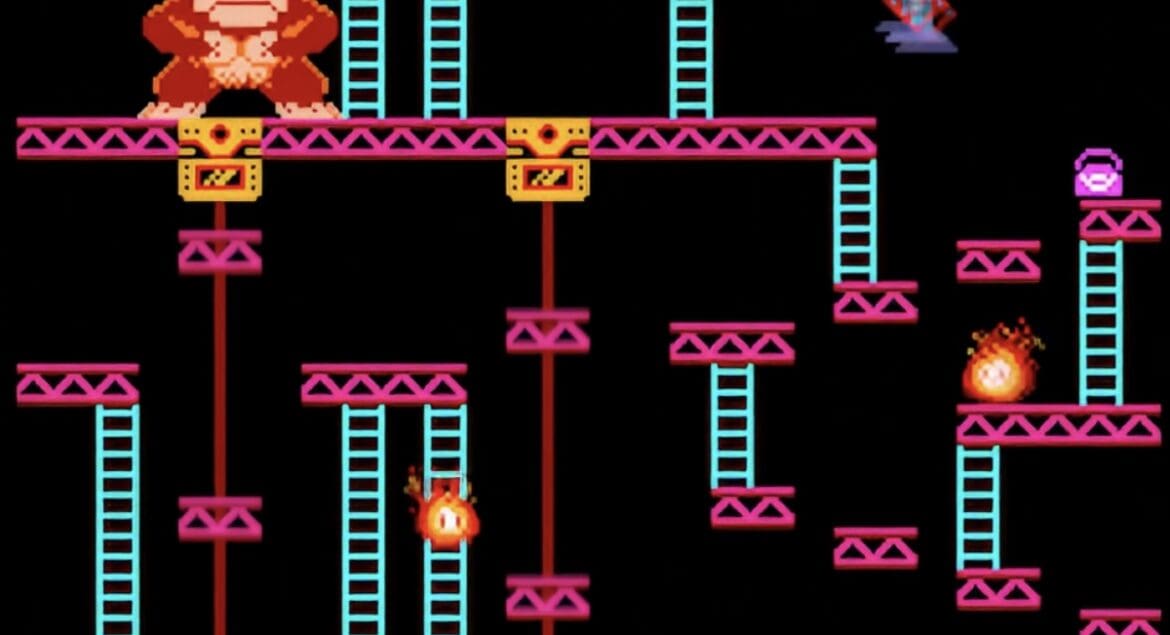
An arcade token could buy another turn at a game, but it could not pay for the bus home. Its usefulness ended at the door. That limitation was part of its appeal to the business selling it. Once cash became tokens, it stayed in the arcade.
Over the following decades, those tokens became card balances, gold stored on game servers and premium currencies sold through online shops. Some could only be spent. Others developed an exchange rate against real money, whether their creators wanted one or not.
The arcade years
Before virtual coins came, the coin slot was the lifeline for any game. Computer Space, the first commercial video game, arrived in 1971 inside a coin-operated cabinet while Pong followed in 1972. Both belonged to a world where one more game meant reaching into a pocket, as The Strong museum’s collection notes explain.
Quarters worked perfectly well, but tokens gave arcades their own currency. Customers exchanged money at the counter, then worked through a handful of coins accepted only by the machines around them. When Chuck E. Cheese’s Pizza Time Theatre opened on May 16, 1977, that ritual became part of a family night out.
There was already a second currency in the room. Tokens bought play; tickets earned from redemption games bought prizes. The two had different jobs, and neither was much use elsewhere.
That arrangement proved durable. The Strong’s arcade exhibit still uses purchased tokens, with the proceeds helping to maintain its vintage machines. But commercial arcades eventually found reasons to move beyond the clink of metal.
The card takes over
The classic arcade token is rare to find these days since it has been replaced with modern technologies. Chuck E. Cheese began testing tap-to-play cards in Killeen, Texas, in December 2014. By November 2015, it had decided to roll them out across its company-owned restaurants. Trade coverage later reported that about 200 of its 746 restaurants had made the switch.
Cards solved familiar problems. They did not jam coin mechanisms, and customers no longer needed to carry handfuls of tokens. More importantly, they changed what an arcade could sell.
A company executive explained that tokens could not easily support half-price days or unlimited play for a fixed period. A digital balance could.
The customer was still buying access to games, but the business could now adjust that access through software. A price, promotion, or play period became something that could be changed without touching a machine.
Gold finds a price
Online games introduced a different possibility. Their currencies could be earned inside worlds that players inhabited for hundreds of hours, and players began deciding what that time was worth.
After EverQuest launched in 1999, its platinum pieces appeared on auction sites for real dollars. The game’s owner had not designed an official cash exchange, but players built one anyway.
Economist Edward Castronova studied those transactions and estimated that a platinum piece was worth roughly one U.S. cent. He also calculated an average earning rate equivalent to $3.42 an hour, as Slate reported. A fictional economy had acquired a measurable relationship with the real one.
Blizzard later tried bringing cash trading inside the game with Diablo III’s real-money auction house. It then closed the system on March 18, 2014. The company said the marketplace undermined the central reward of playing: defeating monsters to find better loot.
Many mainstream games now favor a simpler arrangement. Players buy a premium currency such as Fortnite’s V-Bucks, then spend it on outfits, emotes and passes. Money goes in, but the currency is not designed to be cashed out.
Two coins return
Sweepstakes casinos bring another version of the two-currency arrangement to the screen.
Typically, Gold Coins are used for entertainment and have no redeemable value. Sweeps Coins are promotional currency that may become eligible for redemption as cash or other prizes under the platform’s rules. SweepCasinos777 coverage of the model explains the difference between purchased entertainment currency and prize-linked promotional currency.
Understanding the differences between the two currencies curren matters more than the headline coin total. A large Gold Coin balance is not a cash prize, while receiving Sweeps Coins does not necessarily make them immediately redeemable.
The resemblance to arcade tokens and tickets is easy to see, and no doubt that’s where the inspiration comes from, but it is not an exact match. Arcade tickets are earned through play and exchanged for merchandise. Sweeps Coins are usually distributed through promotions as well as gameplay, and may lead to cash redemption once a larger amount is collected. That potential exit into money changes the stakes.
It also attracts regulatory scrutiny since it’s as close to online gambling as it gets without actually technically being gambling. California’s AB 831, signed in October 2025, targeted online sweepstakes games using dual-currency systems and banned them outright. Several states have taken similar action. However, it’s still legal in roughly half of the US states.
What the balance means
Arcade tokens were never meant to leave the building. Online games complicated that arrangement when players started selling virtual gold to one another, opening the door to new models. Sweepstakes casinos are one such model that makes prize redemption part of the product itself.
That is the important difference. Once a game currency can lead to a cash prize, it is no longer just a convenient way to pay for another turn. It becomes part of the debate over where entertainment ends, and gambling begins.
Related
Original article by www.oldschoolgamermagazine.com