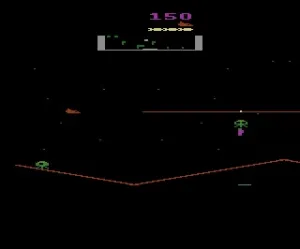
The Atari 2600 was a formidable system in its day. It was a runaway success, spawned several subsequent consoles that, unfortunately, didn’t see the same success, and had an absolutely humongous library of games. While most of that library consisted of original games for the system, a fair number were ports of popular arcade games of the time. Unfortunately, the 2600 simply didn’t have the power required to duplicate the arcade experience of most of those games. Some of those ports turned out to be good games in their own right, but just as many were poor representations of their arcade counterparts.
Fortunately, ingenious modern homebrew developers have taken up the mantle of the venerable retro console and have given us new versions of these classic ports, with some truly surprising results. Here are five homebrew upgrades to Atari 2600 arcade ports.
Pac Man Arcade Enhanced (Atari 2600)
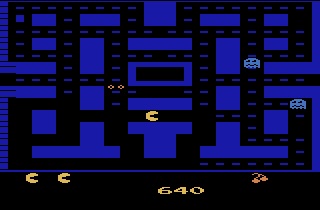
Pac-Man Arcade Enhanced
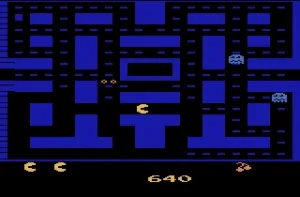
Pac-Man Arcade Enhanced is an ambitious Atari 2600 reworking of Pac-Man that uses the much more capable Ms. Pac-Man conversion as its technical foundation rather than trying to repair Atari’s notorious 1982 Pac-Man. Building on earlier work by Rob Kudla and extensively enhanced by Nukey Shay, it provides a maze, character graphics, colors, sounds, ghost behavior, bonus items, and presentation that more closely resemble Namco’s arcade original. Later refinements even reproduce arcade-style intermissions. The result shows how much better Pac-Man could look and play on the 2600 with the stronger engine and larger ROM available to Ms. Pac-Man.
Space Rocks (Atari 2600)
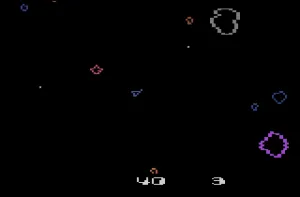
Space Rocks
Space Rocks, developed by Darrell Spice Jr., is essentially a deluxe modern interpretation of Asteroids and Asteroids Deluxe for the Atari 2600. Rather than modifying Atari’s original cartridge, Spice created a new game with rotating asteroids, vector-like graphics, Magna-Mines inspired by Asteroids Deluxe, multiple difficulty levels, configurable special abilities, and extensive one- and two-player options. It uses 32 KB and DPC+ enhanced cartridge technology, so it benefits from hardware far more sophisticated than cartridges available when Atari released Asteroids. Consequently, Space Rocks is less an example of what Atari could realistically have produced in 1981 and more a demonstration of how spectacular an Asteroids-style game can become when modern cartridge technology meets genuine Atari 2600 hardware.
Donkey Kong VCS (Atari 2600)
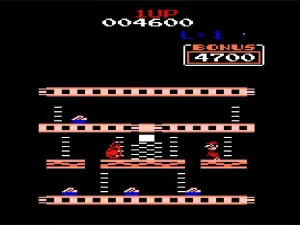
Donkey Kong VCS
Donkey Kong VCS, developed by Andreas Dietrich, attempts to create a much more complete Atari 2600 interpretation of Nintendo’s arcade Donkey Kong than Coleco’s heavily abbreviated 1982 cartridge. While the commercial 2600 game included only the barrel and rivet stages, Dietrich’s 32 KB, SARA RAM-assisted version recreates all four arcade stages, including the missing conveyor and elevator screens, plus cutscenes, animations, music, and numerous details omitted from the original conversion. The stages use vertical scrolling to accommodate their more elaborate designs within the 2600’s display limitations. Donkey Kong VCS is particularly interesting because it shows the console could represent substantially more of the arcade game than the famous two-screen Coleco release suggested.
INV+ (Atari 2600)
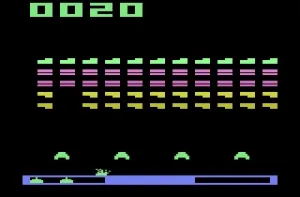
INV+
INV+, created by Erik Mooney and Piero Cavina, is a modern reinterpretation of Space Invaders that is remarkable for accomplishing its improvements within a 4 KB ROM. Among its most impressive achievements is displaying the arcade game’s full formation of 55 invaders arranged in five rows of eleven, something Atari’s official 2600 conversion did not reproduce in the same manner. INV+ also incorporates more arcade-like scoring, improved animation, additional gameplay modes, an Easter egg, PAL support, and simultaneous two-player play. Because it does this without a modern coprocessor or enormous ROM, INV+ offers a particularly revealing demonstration of how decades of accumulated Atari 2600 programming knowledge let homebrew developers extract capabilities from the hardware that weren’t fully exploited during its early commercial years.
Defender Arcade (Atari 2600)
Defender Arcade
Defender Arcade, created by Bob “PacManPlus” DeCrescenzo, takes an ingenious approach to improving Atari’s compromised 2600 conversion of Williams’ Defender: instead of rewriting the original cartridge, it uses Atari’s technically superior Stargate (Defender II) as its foundation and transforms it back into the original Defender. This eliminates or reduces some of the earlier game’s notorious compromises, including its crude graphics and the player’s ship disappearing whenever it fires, while improving enemies, animation, sound, and overall presentation. Although it still cannot perfectly reproduce the arcade machine’s complex controls, graphics, and enemy behavior, Defender Arcade demonstrates that techniques developed later in the 2600’s life could have produced a considerably more convincing version of Defender than Atari’s original release.
Related
Original article by www.oldschoolgamermagazine.com